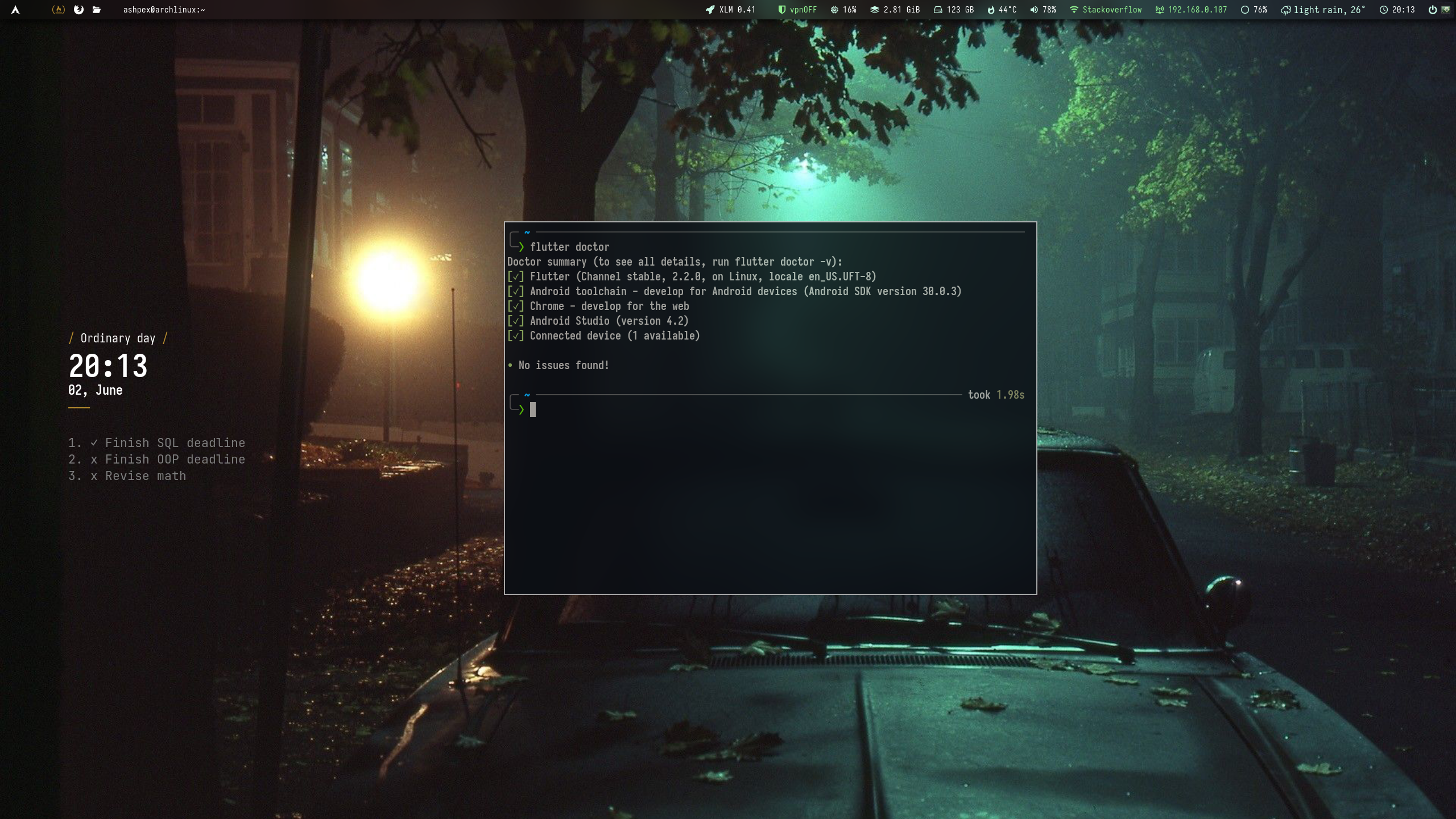
Ranger manager configure
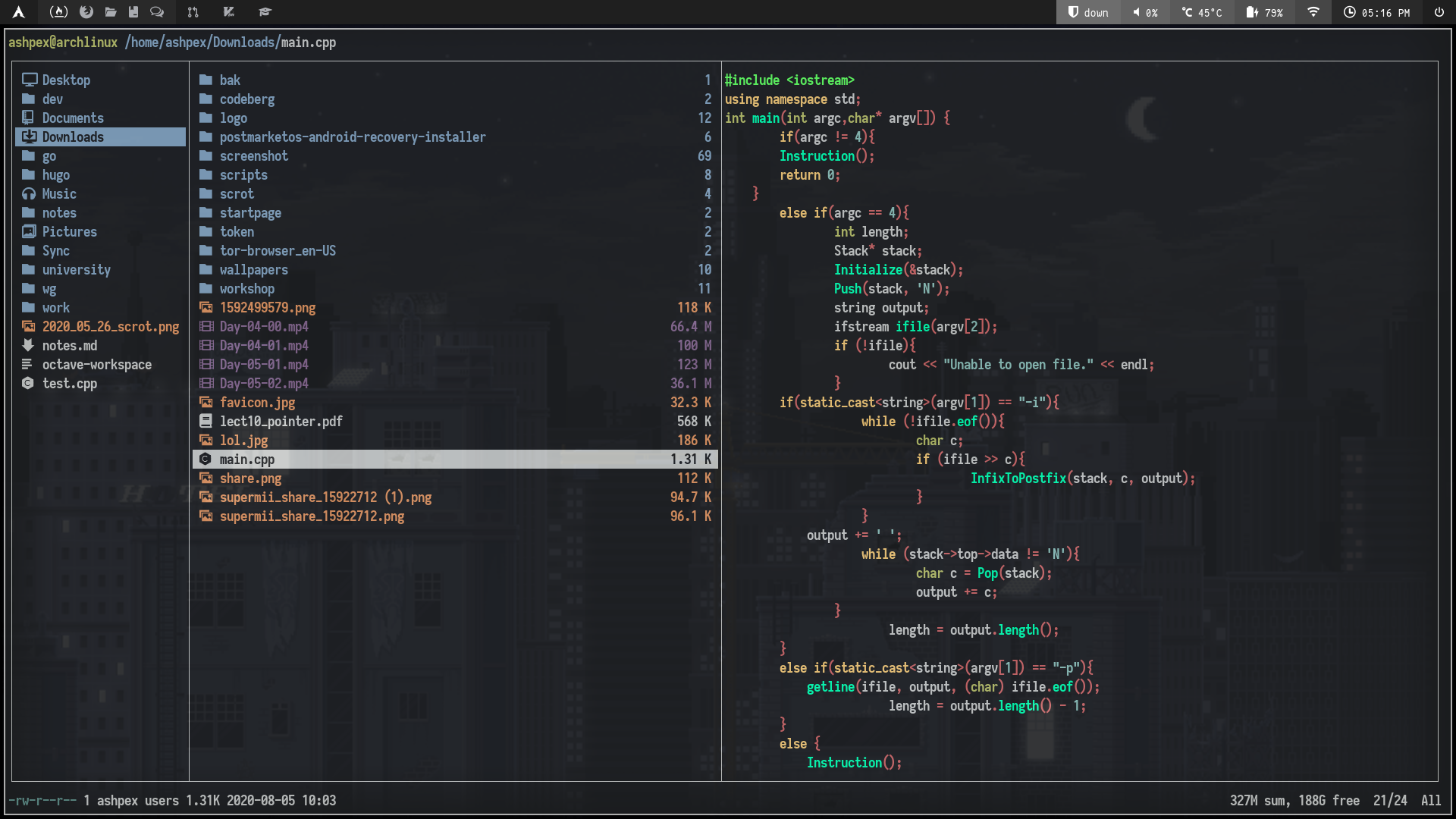
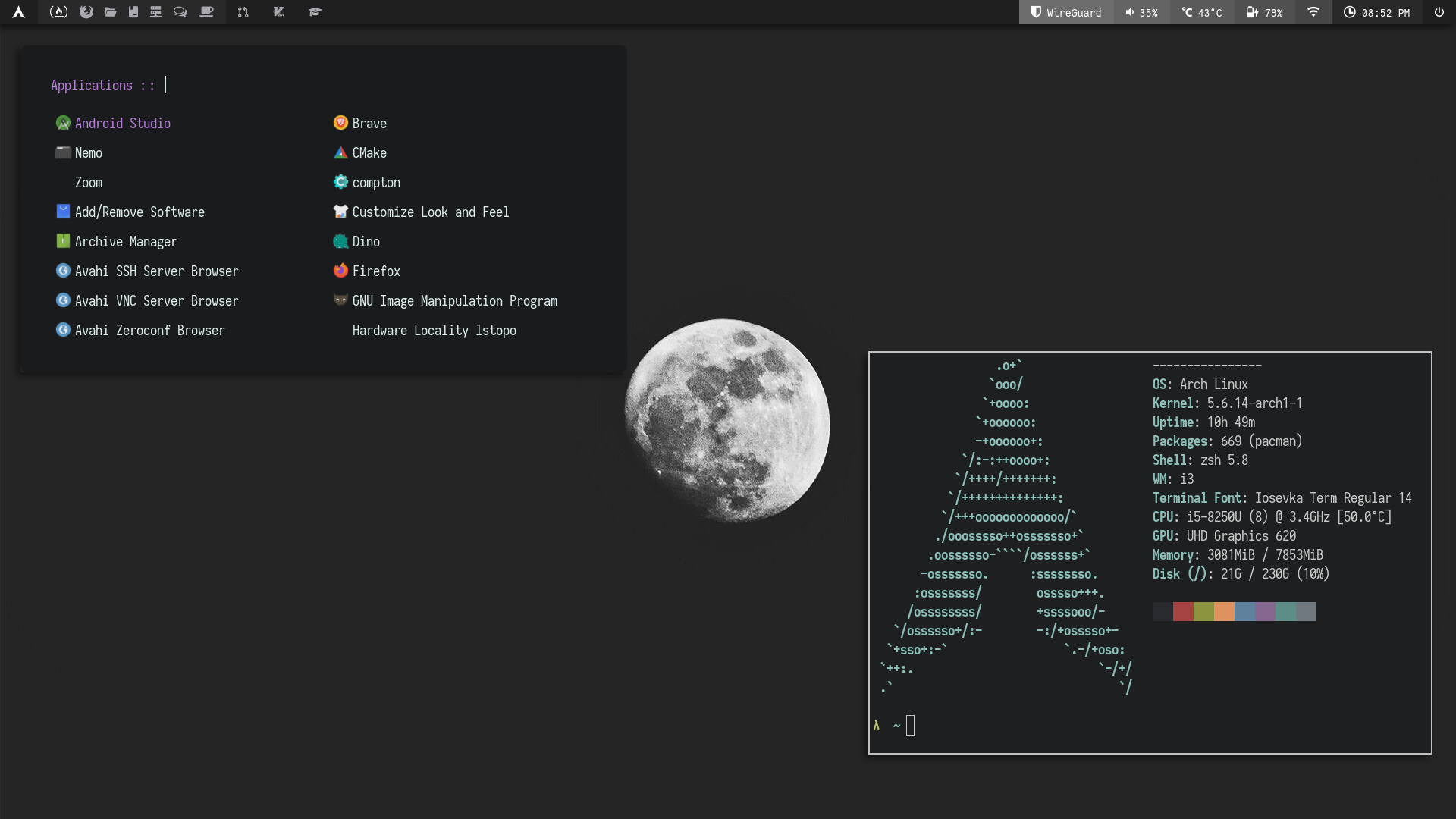
This is my personal config for the ranger file manager. Some basic information:
| OS | Arch Linux |
|---|---|
| Font | Iosevka 14 |
| Terminal | Termite |
| WM | i3 |
This is my personal config for the ranger file manager. Some basic information:
| OS | Arch Linux |
|---|---|
| Font | Iosevka 14 |
| Terminal | Termite |
| WM | i3 |
After writing a post about my phone setup, I realized that I haven’t had one for my bigger machine (touchy). So here it goes.
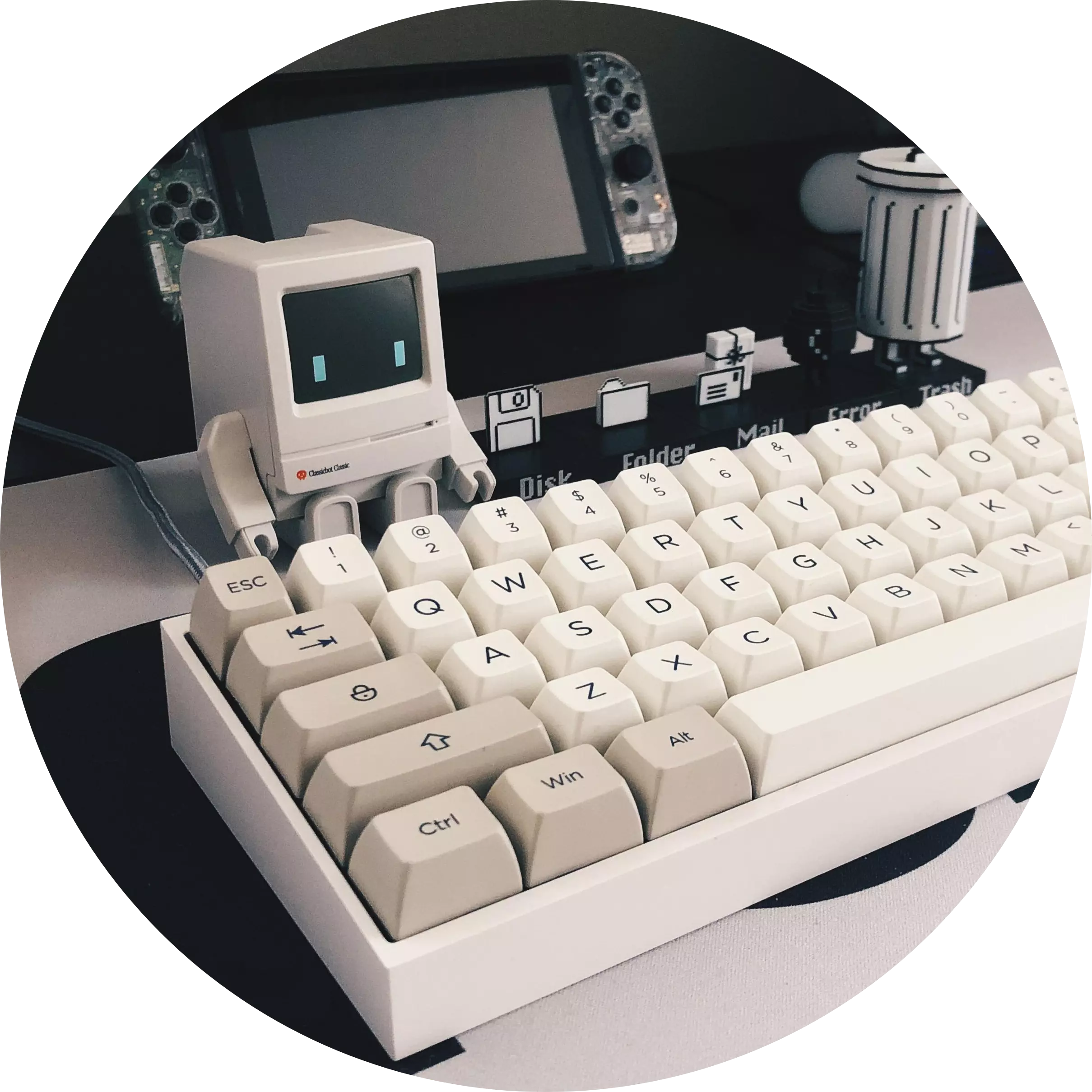
So my currently setup is a ThinkPad T480 and… yeah, that’s all. You heard it right. I plan to get a 27 inch monitor later though. And furthermore, a legit PC? Oh don’t forget my “soon to be bought” mechanical keyboard ( I have a long wishes list. I meant, who doesn’t?).
Folding@home is a distributed computing project started by Stanford University to help understand protein folding, misfolding, and related diseases. The project uses the idle processing resources of thousands of personal computers belonging to people that have installed the Folding@home software on their systems. In this post I will describe how to install and configure the Folding@home client software on Ubuntu server.
Algorithm complexity is a measure which evaluates the order of the count of operations, performed by a given or algorithm as a function of the size of the input data. To put this simpler, complexity is a rough approximation of the number of steps necessary to execute an algorithm. When we evaluate complexity we speak of order of operation count, not of their exact count. For example if we have an order of N2 operations to process N elements, then N2/2 and 3*N2 are of one and the same quadratic order.
All rights and credits reserved to Tania Rascia. This is a rewrite (kind of) just for sake of simplicity.